
Reviewed · ALMATY TOURS
Tanbaly Gorge: Ancient Petroglyphs UNESCO Site Day Tour
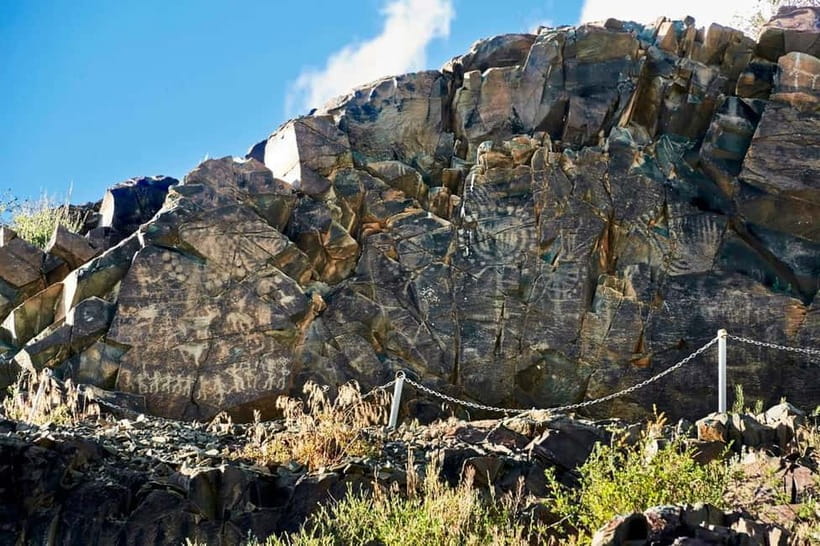
Tanbaly Gorge is not a quick city excursion with one famous object and a gift shop at the end. It is a spread of ancient carvings, burial grounds, and settlements across the dry Chu-Ili mountains, with the strongest concentration gathered in a central canyon. Some petroglyphs date from the 14th and 13th centuries BCE, while others were made as late as the 18th century CE.
I like two things here: the sense of seeing a place that has not yet been polished for mass tourism, and the chance to understand the carvings with a proper guide. Nursultan is especially good at explaining the site and wider Kazakh culture, while Minara has led visitors through the archaeology with clear, useful detail. The main drawback is the long drive, about 2.5 hours each way, followed by a roughly 2 km walk with some hiking.
Key points to know before booking
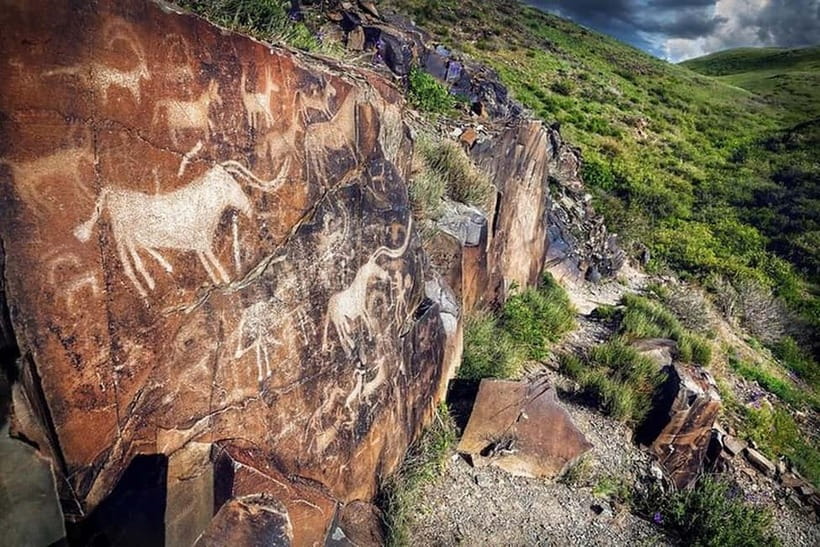
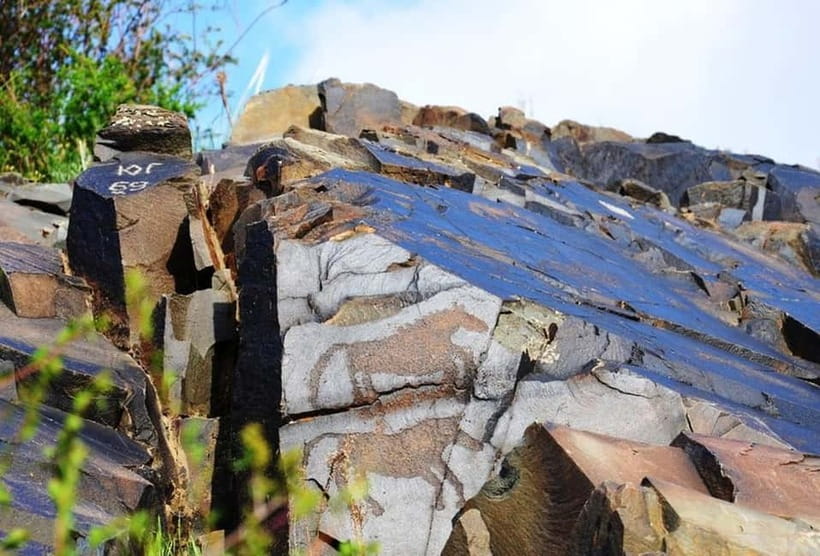
- Bronze Age carvings in an open-air setting: See animals, people, scenes of daily life, and ritual images cut into the rock over many centuries.
- The central canyon matters most: This area has the densest group of engravings and possible altars linked to ancient offerings.
- A full day from Almaty: The round trip takes about five hours, with around three hours devoted to the guided visit.
- Private transport and guiding: You get hotel pickup, an air-conditioned vehicle, bottled water, entrance tickets, and an English-speaking guide.
- A quiet alternative to crowded sights: Tanbaly offers a more solitary archaeological visit, though that also means fewer visitor comforts.
- Bring proper shoes: The walk is only about 2 km, but the route includes uneven ground and some uphill movement.
Why Tanbaly feels different from an ordinary day trip
The first surprise is scale. Tanbaly is not simply a rock face with a few drawings. The archaeological complex includes several groups of petroglyphs, nearby settlements, and burial grounds, all tied to the lives of pastoral communities that used this area over a very long period.
The carvings give you more than attractive shapes on stone. They offer clues about animals, herding, social structure, ceremonies, and belief. You can look at a figure and wonder what it meant, but a guide helps turn that question into a useful way of reading the site.
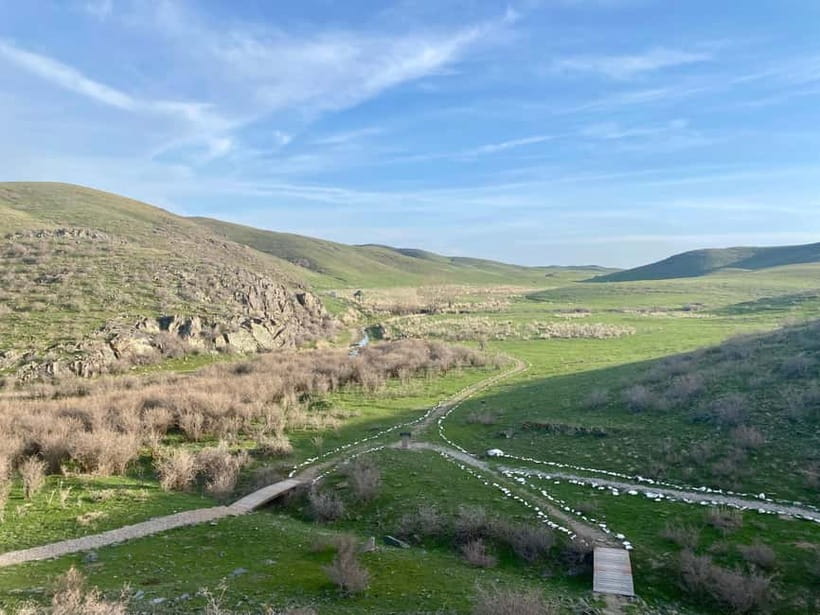
The setting also changes the experience. The Chu-Ili mountains are broad, dry, and exposed, with little of the soft scenery associated with a typical mountain day out. That stark setting helps you understand why the rock surfaces mattered. These were places where people gathered, moved animals, marked rituals, and left images that survived in the open air.
Tanbaly became a UNESCO World Heritage Site because of this combination of art, archaeology, and cultural evidence. The value is not just in the age of individual carvings. It lies in the complete archaeological setting, where images, graves, settlements, and ritual spaces help explain how pastoral societies lived.
A few more Almaty days to weigh up
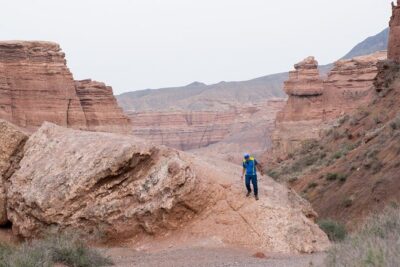
- Almaty: Charyn Canyon, Kolsay, and Kaindy Lakes Day Trip
★ 4.7 · 1,522 reviews - Kolsai, Kaindy Lakes and Charyn Canyon Small-Group Tour
★ 5.0 · 642 reviews - Almaty: Kolsai-Kaindy Lakes and Charyn Canyons Day Trip
★ 4.7 · 505 reviews
The 2.5-hour drive from Almaty
Your day begins with pickup from your hotel in Almaty. The drive to Tanbaly takes around two and a half hours in each direction, so expect transport to take up a large part of the eight-hour outing.
That is a real consideration. If you want a short activity with maximum time on foot, this is not the right choice. If you are willing to trade road time for access to an unusual archaeological site, the journey makes sense.
The air-conditioned vehicle is important here. You are heading out from the city into a dry, open region, and a comfortable ride makes the long transfer easier. Bottled water is included, but meals are not, so you should plan to eat before departure and ask in advance if you need a specific food arrangement.
The private-group format is another practical advantage. You are not tied to a large bus full of strangers, and you can ask questions as the site unfolds. Past visitors have singled out guides including Nursultan, Minara, and Nur for their friendly manner, careful driving, English, and ability to explain both Tanbaly and Kazakhstan more broadly.
One useful detail from the guiding service is the attention paid before and after the visit. Communication before pickup has been described as reassuring, and one guide even served tea at the end of the day. That is a small touch, but on a long excursion, thoughtful pacing and clear contact can make the outing feel far less tiring.
Entering the museum-reserve
At Tanbaly, you visit a museum-reserve rather than an isolated roadside attraction. The entrance ticket is included, along with the guided excursion, so you can focus on the site instead of sorting out separate admissions.
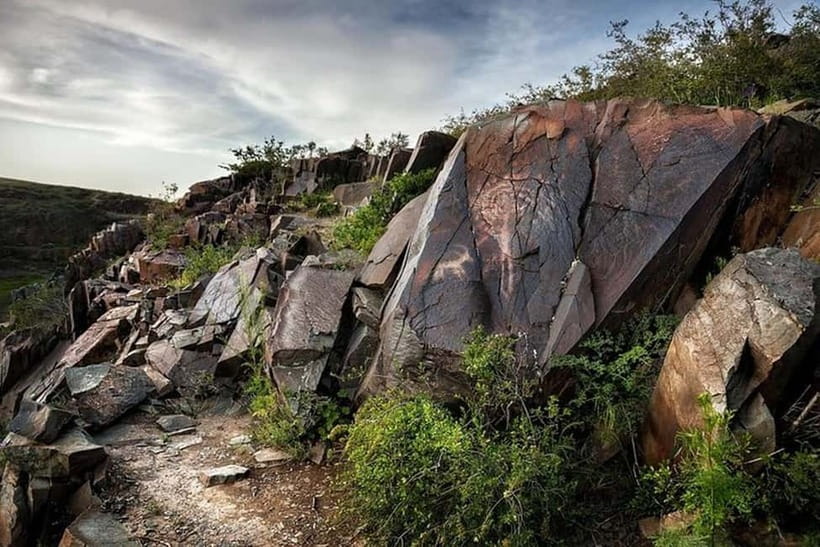
The first part of the visit gives you a useful frame for what lies outside. This matters because ancient carvings are easy to glance at and misunderstand. A line may be an animal, a person, a tool, or part of a larger scene. Light, weathering, and the angle of the rock can also affect what you see.
A specialist guide at the site may add archaeological detail to the broader information provided by your main guide. The combination is valuable. Your driver and tour guide can tell you about Almaty and Kazakh culture, while the local specialist can focus closely on the carvings, dates, and interpretation of the archaeological complex.
Do not expect a large museum with long indoor displays. The core experience is outside, under open skies, with the rock surfaces themselves carrying most of the story. That makes the visit feel direct, but it also means sun, wind, and dry conditions are part of the deal.
Walking through the central canyon
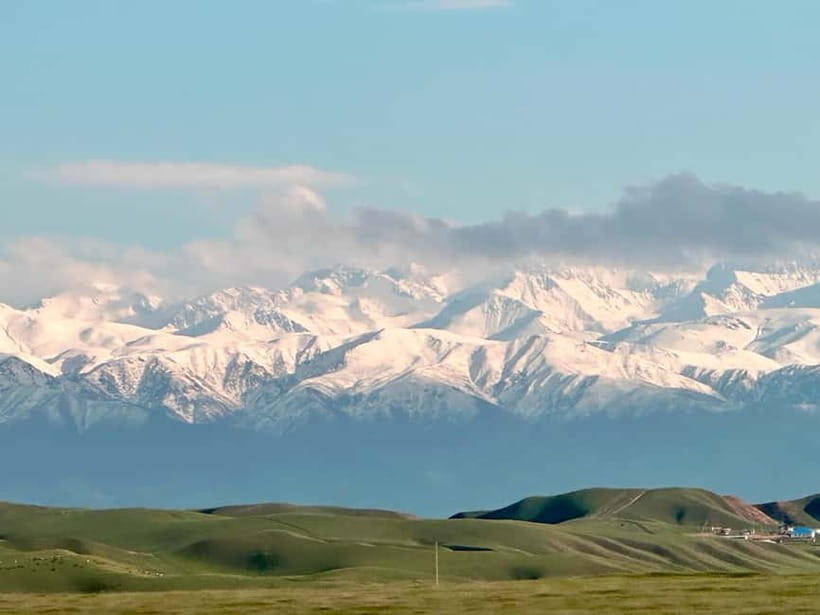
The central canyon is the most important part of the visit because it contains the densest concentration of engravings. This is where your guide can help you slow down and compare different images rather than treating the rocks as a single wall of markings.
The petroglyphs cover a long span of time, from the Bronze Age through the 18th century CE. That long sequence gives the site unusual depth. You are not looking at one frozen moment, but at generations of people returning to the same broad area and adding their own marks.
The carvings are linked to pastoral peoples whose lives depended on animals, movement, and seasonal use of land. They also offer evidence of social organization and ritual practice. You may see images that suggest hunting, husbandry, ceremony, or symbolic belief, but the guide’s explanation is essential when meaning is uncertain.
Some places in the canyon are believed to have functioned as altars. Their presence suggests sacrificial offerings and gives the site a ritual dimension. You should treat this as an informed archaeological interpretation, not as a perfectly settled explanation for every stone arrangement.
The walk covers about 2 km, but distance alone does not tell the whole story. You will hike between petroglyph groups, and the ground may be uneven. Comfortable shoes are a must. The tour is not suitable for wheelchair users, people with mobility impairments, people over 75, or anyone with a low level of fitness.
You do not need to be an experienced hiker, based on the stated requirements, but you should be comfortable walking outside and handling some uphill terrain. If standing and walking on rough ground is difficult for you, the site will be frustrating rather than rewarding.
Same base, a completely different day out:
- From Almaty: Kolsay, Kaindy Lakes and Charyn Canyon Day Trip
★ 4.6 · 452 reviews - Almaty: Kolsai Kaindy Lakes & Charyn Canyons 2-Day Tour
★ 4.8 · 432 reviews - Kolsai Kaindy Lakes with Charyn Canyons 2-day tour
★ 5.0 · 392 reviews - Kolsai Kaindy Lakes with Charyn Canyons Day Tour (lunch included)
★ 5.0 · 292 reviews
What the carvings can tell you
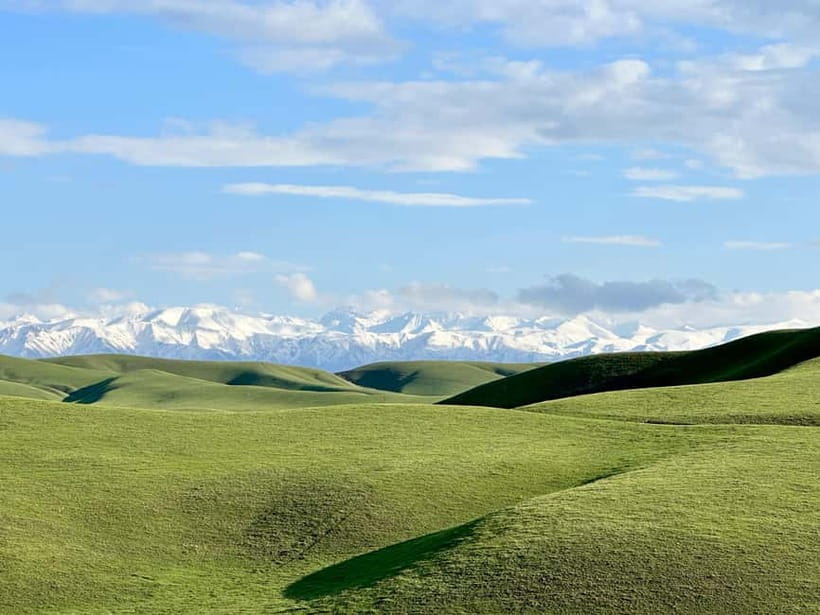
Tanbaly is most rewarding when you stop treating the petroglyphs as decoration. The figures are clues. They point toward what people valued, feared, owned, and performed.
Animals are central to the visual record because herding shaped daily life. Images connected with animals can help you picture a society that moved with its livestock and organized its work around pasture. Other figures may relate to people, ceremonies, or social roles.
The burial mounds add another layer. They show that Tanbaly was not used only as a passing place or a surface for drawings. The area held lasting importance, with the dead, the living, and ritual activity connected across the same archaeological zone.
This is also why a guide makes such a difference. Without explanation, you may notice that one carving is larger, deeper, or more carefully placed than another, but you may miss the significance of its setting. A good guide points out how the images relate to the canyon, graves, settlements, and possible ritual spaces.
Nursultan has been praised for combining broad cultural knowledge with a warm, positive personality. Minara is another name associated with clear guidance at the site and practical suggestions for seeing more of Almaty. You should confirm the assigned guide when booking, since the specific person may vary.
How the timing shapes your day
The tour lasts eight hours, including hotel pickup, the drive, the visit, and the return to Almaty. The guided portion is listed at about three hours, which gives you enough time to see the main areas without turning the day into a rushed photo stop.
Still, the ratio is worth understanding. You spend roughly five hours in the vehicle and three hours at the archaeological complex. I would book this for the importance and rarity of Tanbaly, not because it offers a relaxed mountain picnic.
The morning departure is sensible. It gives you the best chance of completing the site visit within daylight and leaves the day organized around the long transfer. Starting times vary, so check availability when you reserve.
The private format should also make the day more flexible than a large group outing. You can ask for clarification, take time to examine a carving, and discuss the site at your own pace. The exact level of flexibility is still controlled by the fixed drive and museum-reserve schedule, so do not expect an entirely custom day.
Is the $146 price fair?
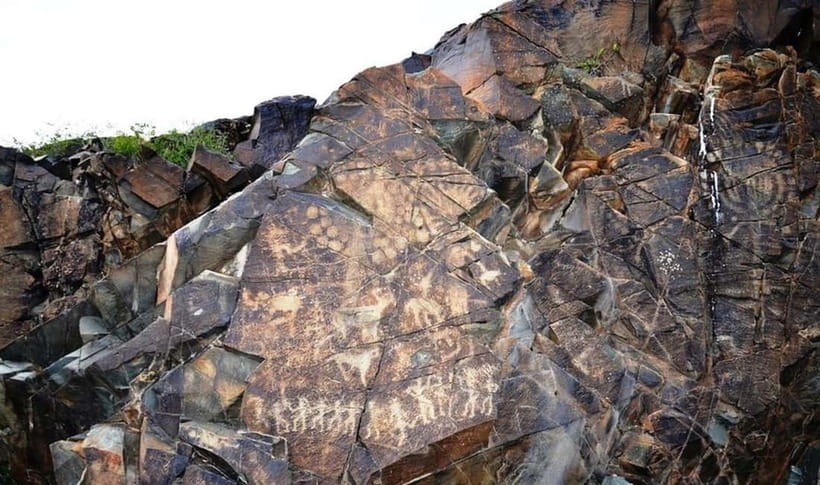
At $146 per person, this is not a cheap add-on. The price makes more sense when you count what is included: hotel pickup in Almaty, private transportation, an air-conditioned vehicle, entrance tickets, bottled water, an English-speaking professional guide, and the guided visit itself.
You are also paying for access to a UNESCO site that is far outside the city. Reaching Tanbaly independently would require arranging transport and working out the site visit on your own. The guide adds the most value because the carvings need context, and the site covers enough ground that a first-time visit could otherwise feel confusing.
The price is strongest for two or more people sharing a private group, especially if you value comfort and direct attention. It is less compelling if you mainly want a low-cost outing from Almaty or if ancient rock art is not a major interest.
Meals and personal expenses are not included. That is easy to overlook on an eight-hour trip, so plan around it. At minimum, make sure you leave with enough water and food for the road, even though bottled water is supplied.
Free cancellation up to 24 hours before the tour and the reserve-now, pay-later option reduce some booking risk. Those terms are useful when your Almaty schedule is still changing, but you should check the current conditions at the time of booking.
Who should book this Tanbaly tour?
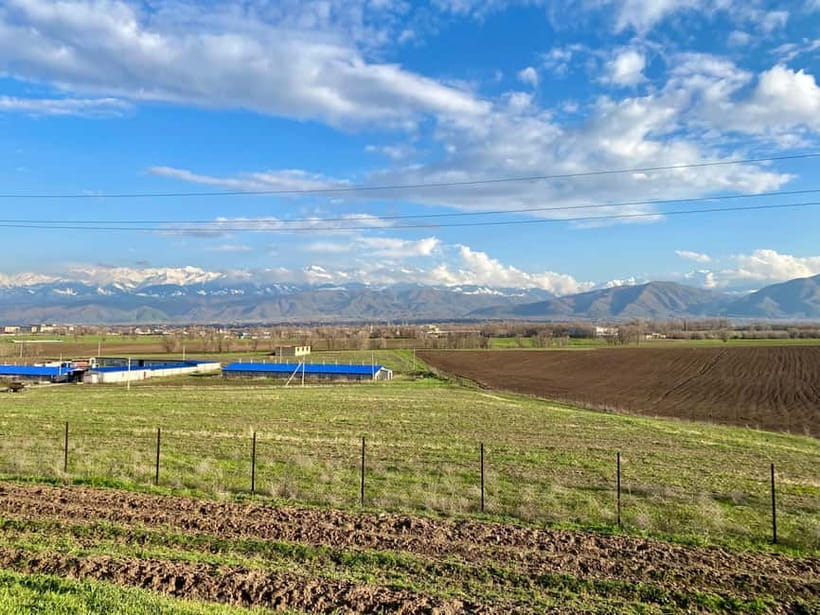
I would recommend it to you if you enjoy archaeology, ancient art, and places that still feel lightly visited. It is also a strong choice if you have already seen Almaty’s main sights and want a day that says something specific about Kazakhstan rather than offering another general scenic drive.
You should be reasonably fit and comfortable outdoors. The distance is manageable for many active visitors, but the route includes hiking, and the attraction is not accessible for wheelchairs or people with significant mobility limits.
Families with very young children may find the long drive and interpretive focus demanding, though the supplied information does not set a child age limit. Older visitors should pay close attention to the stated restriction for people over 75.
This is not the right tour if you want restaurants, shopping, or a packed schedule of several attractions. Tanbaly is one focused archaeological visit, supported by a long transfer.
Practical ways to get more from the visit
Wear shoes with a firm sole. Sandals or smooth casual shoes will make the walk less pleasant, especially when moving between separate petroglyph groups.
Dress for an exposed outdoor site. The information provided does not specify seasonal clothing, but the dry mountain setting means you should be ready for sun and changing conditions. Comfortable shoes are the one stated requirement, and they are worth taking seriously.
Use the drive as part of the cultural experience. Guides such as Nursultan have been noted for talking about Almaty and Kazakhstan during the journey, not just reciting facts once you reach the rocks. Ask questions about the country, the region, and how Tanbaly fits into a wider visit.
Give the carvings time. The best part of a site like this is not counting how many images you photograph. It is learning to notice how the carvings cluster, how they sit within the canyon, and why certain areas may have held ritual importance.
Should you book it?
Book this tour if Tanbaly’s ancient rock art is high on your Kazakhstan wish list and you want the ease of a private ride with an English-speaking guide. The long drive is justified by the UNESCO setting, the concentration of carvings, and the chance to see a site that has not yet become crowded.
Skip it if you dislike long road transfers, need step-free access, or prefer a day with several different activities. For the right visitor, though, Tanbaly offers a rare kind of sight: not a reconstructed monument, but an open-air record left on the rocks by people who lived here thousands of years ago.
FAQ
Where does the Tanbaly tour start?
Pickup is from your hotel in Almaty.
How long does the tour last?
The full experience lasts eight hours.
How long is the drive from Almaty to Tanbaly Gorge?
The drive takes about 2.5 hours each way.
How much walking is involved?
The visit includes around 2 km of walking, with some hiking between the petroglyphs.
What language is the tour offered in?
The live tour guide service is offered in English.
Is this a private tour?
Yes. The experience is arranged for a private group.
What is included in the price?
The price includes the guided Tanbaly excursion, professional guide service, an air-conditioned vehicle, entrance tickets, and bottled water.
Are meals included?
No. Meals and personal expenses are not included.
Just added around Almaty
- Almaty : Must-See Private Walking tour★ 5.0 · 3 reviews
- Almaty: Electric Bike Tour to Big Almaty Lake or Kok-Zhailau★ 3.7 · 3 reviews
- Almaty: Full Day City Tour with Lunch and Museum Tickets★ 4.6 · 3 reviews
- Altyn Emel, Singing Dune, Charyn canyon, Kolsay, Kaindy lake 4 days tour★ 5.0 · 3 reviews
- City Pub Crawl Almaty★ 5.0 · 3 reviews
- Almaty Airport Transfer Mercedes V-Class★ 5.0 · 3 reviews
- Charyn Kolsay Kaindy Private Tour★ 5.0 · 3 reviews
- Almaty 1-Day Tour: Kolsay, Kaindy & Charyn Black Canyon★ 5.0 · 3 reviews
Almaty Tours, compared.
Charyn Canyon, Kolsay, and Kaindy Lakes Day Trip
Read our review →
Kolsai Kaindy Lakes & Charyn Canyons 2-Day Tour
Read our review →

Treasures of Almaty lakes Kaindy and Kolsai,Charyn Canyon VIP car
Read our review →
Almaty City: Big Almaty Lake Roundtrip Transfer and Tour
Read our review →
Singing dunes, Aktau Mountains & Altyn Emel Day Trip
Read our review →Browse the lists this tour appears in