
Reviewed · ALMATY TOURS
Guided Walking City Tour in Almaty
Almaty reveals itself through its buildings on this three-hour private walking tour. You move from Silk Road imagery in the Zhibek Zholy metro station to imperial schools, Soviet housing, a wooden cathedral, and the local market district. The guide uses humor while explaining how the city changed from a provincial outpost into modern Kazakhstan’s largest city.
I like the wide historical range and the fact that the walk includes a metro ride rather than treating Almaty as a collection of pretty facades. I also like the unusual details: the central telegraph building shaped like a shopping net, seashells used on 1960s buildings, and the city’s efforts to cope with earthquakes and water problems. The main caution is simple: this is more an architecture and urban-history tour than a broad introduction to Kazakh food, politics, or daily life.
Key points at a glance
- Zhibek Zholy metro station: Begin underground with artwork tied to the ancient Silk Road, and use the included ticket to reach the city center.
- Unusual Soviet design: See the central telegraph building, often described as resembling a string shopping bag, along with Stalin-era buildings and the famous Stalin cake style.
- Imperial and Soviet Almaty: Compare pre-revolutionary schools, 1940s to 1960s housing, and later public buildings along the route.
- Panfilov Park landmarks: Visit the earthquake-surviving cathedral, wooden officer club, and Soviet World War II victory monument.
- Optional Green Bazaar finish: Continue to the farmers market or return toward the start through the Arasan bath complex.
- Private format: Only your group participates, making it easier to ask questions or adjust the conversation.
What this Almaty walk is really about
This tour works best as a guided reading of Almaty. Instead of racing from one famous sight to another, you follow the city’s layers. The route links imperial Russia, the Soviet period, and independent Kazakhstan through streets and structures that still serve ordinary urban life.
That approach gives you a useful frame for the city. Almaty was not always the major Kazakh center you see today. The walk presents it first as a small provincial town near the Asian edge of the Russian Empire, then as the capital of the Soviet Republic of Kazakhstan, and finally as a city in an independent state.
The tone should be light. The guide is described as professional and humorous, which matters on a tour built around buildings and dates. Architecture can become dry when every stop turns into a lecture. Here, odd design choices and practical questions, such as how residents obtained running water or why seashells appeared on buildings far from the coast, help keep the story grounded.
Still, set your expectations correctly. One rating describes the tour as mostly architecture, with little else. That is a fair warning, not necessarily a fault. If you want an introduction centered on food, local customs, or personal stories, you may find the scope narrow. If you enjoy cities as historical documents, the focus makes good sense.
More walking tours in Almaty:
- Almaty: City Highlights Walking Tour with Chocolate Shop
★ 4.8 · 34 reviews - Almaty Walking Tour: 9 Must-See Sights in a Small Group
★ 5.0 · 14 reviews - Almaty Walking Food Tour
★ 5.0 · 11 reviews
Starting underground at Zhibek Zholy
The meeting point is Zhibek Zholy, Almaty’s train and metro area, with the walk scheduled to begin at 11:00 in the morning. The first stop is the Zhibek Zholy metro station, where your admission ticket is included.
The station’s name points to the Great Silk Road, and its decoration reflects that connection to old trade routes. This is a smart opening. You begin with Almaty as part of a much older network before moving into the city’s Russian imperial and Soviet chapters.
The metro system is new and each station has its own story to tell. That makes the short ride useful beyond simple transportation. You get a quick look at a modern piece of the city while the guide links it to a place that existed long before the present metro line.
Allow yourself enough time to arrive without rushing. The stated start point is clear, but the tour also lists pickup as available, so confirm the exact arrangement when booking. The official meeting point remains Zhibek Zholy, and the activity returns there at the end.
Panfilova Street and Almaty’s oddest buildings
From the metro, the walk reaches pedestrian Panfilova Street. This section brings cafes and restaurants into the picture, so it offers a livelier street setting than the underground opening. You can also get a sense of how formal historic buildings now share space with everyday city life.
The architectural surprise here is the central telegraph building. Its shape is compared to a string bag or shopping net, an unusual choice in the conservative design climate of the Soviet Union. You do not need to be an architecture specialist to appreciate the point: public buildings were not always plain blocks, and local designers sometimes made room for playful forms.
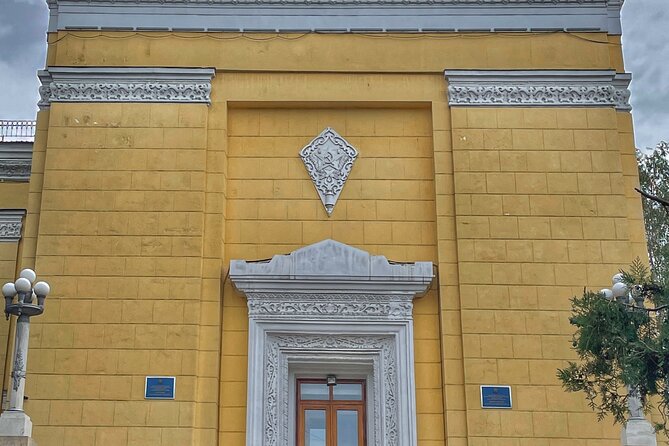
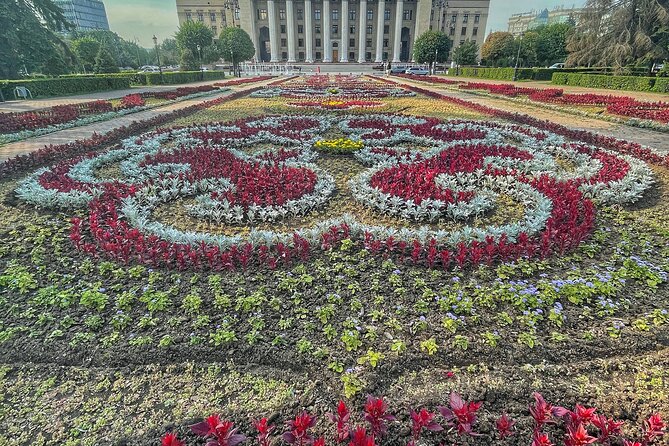
From this area, you can see the Kazakh Opera and Ballet Theater. Its design combines Asian motifs with European classical elements. That pairing gives the guide a natural way to discuss how Kazakhstan’s public architecture tried to express more than one cultural influence at once.
This part of the route is also where the tour may feel less personal. The emphasis is on visual evidence and design history. You will hear why a building looks the way it does, but the supplied information does not promise an interior visit or a performance. Treat the theater as an exterior landmark and viewpoint unless your guide tells you otherwise.
Kunaev Street and the Gymnasium block
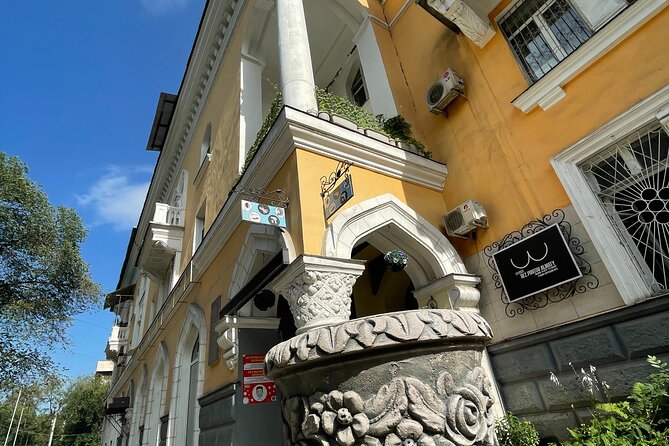
The route then continues to Kunaev Street, passing more Stalin-era architecture and residential buildings from the 1940s through the 1960s. These are useful streets for understanding how Almaty expanded and rebuilt during the Soviet period.
The term Stalin cake house refers to the heavy, decorative style associated with the period. You will also encounter ordinary living areas from the same decades, which is important. A city is not only grand public buildings. Housing tells you how government plans affected daily urban space.
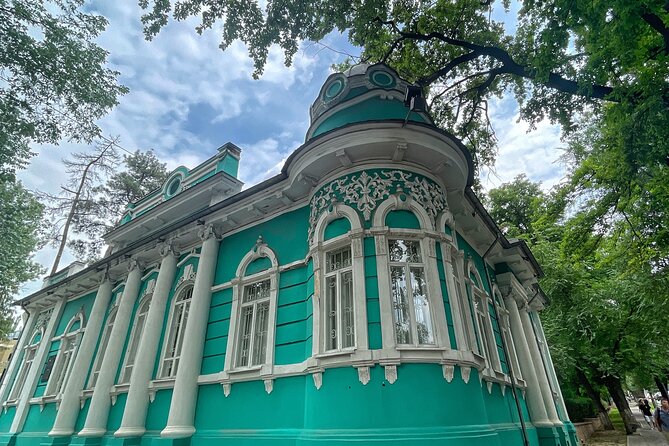
The tour also discusses the so-called Gymnasium block. Several pre-revolutionary high-school buildings founded by the imperial Russian government survived here. Their presence helps you compare two very different periods without needing a museum display: imperial educational buildings on one side, Soviet planning and housing on the other.
This is a good point to ask questions. Because the tour is private, your group can stop to clarify dates, design terms, or the difference between imperial and Soviet construction. The private format adds value when the subject is specialized, although it also means the $60 price is being paid for a small-group conversation rather than a large shared walk.
A few more Almaty days to weigh up
- Almaty: Charyn Canyon, Kolsay, and Kaindy Lakes Day Trip
★ 4.7 · 1,522 reviews - Kolsai, Kaindy Lakes and Charyn Canyon Small-Group Tour
★ 5.0 · 642 reviews - Almaty: Kolsai-Kaindy Lakes and Charyn Canyons Day Trip
★ 4.7 · 505 reviews - From Almaty: Kolsay, Kaindy Lakes and Charyn Canyon Day Trip
★ 4.6 · 452 reviews
Panfilov Park and the 1911 earthquake
The longest stop is 28 Panfilovcev Park, Almaty’s oldest park. The visit lasts about 45 minutes and brings together several of the city’s most important landmarks.
The first major sight is the city’s oldest cathedral, a wooden Russian-style building that survived the devastating earthquake of 1911. The survival story gives the tour a welcome shift from style to substance. You are not simply looking at ornament. You are asking why one building endured while so much around it was damaged or destroyed.
The guide also covers the region’s natural disasters and how Almaty survived them at different times. Earthquakes are not an abstract subject here. They shaped construction, city planning, and the way residents understood their home.
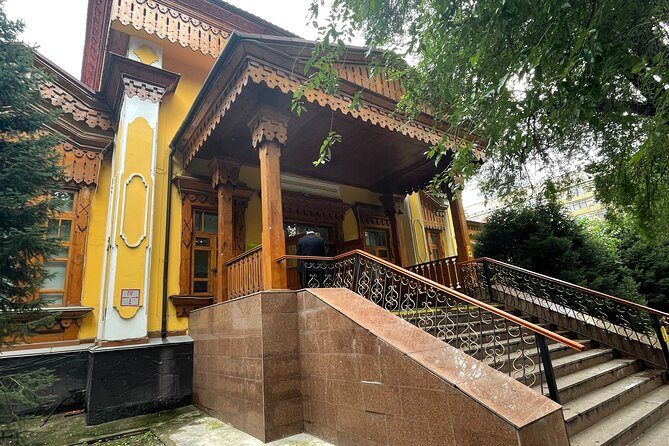
Nearby, you see a wooden former officer club built in the old Russian style. Its material and form provide another contrast with the later stone and concrete structures along the route. The park also contains an ambitious Soviet monument to victory in the Second World War.
Together, these sights make the park the tour’s strongest historical section. Imperial Russia, religious architecture, military memory, Soviet public art, and earthquake history all meet in one place. If your main goal is to understand Almaty’s past, this is likely the part you will value most.
Keep in mind that the tour description does not promise entry into every building. The walk is primarily outdoors, and the listed admission tickets are free for the stops. Ask the guide about access on the day rather than assuming the cathedral or officer club interior is included.
Green Bazaar or the Arasan bathhouse
At the end, you may continue toward the Green Bazaar, the local farmers market. This is an optional extension, so clarify whether you want to take it before the walk reaches its final stage.
A market finish can change the feel of the tour. After several hours of architecture and public history, you get closer to the practical side of city life, including the place where local produce and other goods are sold. The provided details do not promise tastings, shopping assistance, or a market-focused guide talk, so think of this as a chance to see the setting rather than a food tour.
If you prefer to return to the original point, the route can pass the Arasan bathhouse. This 1980s complex is a significant example of traditional bath facilities. It adds a later Soviet chapter to the walk and offers another look at how public life was organized through architecture.
The optional ending is useful because it gives you a choice. Continue if you want more walking and a market district. Return if three hours of city streets, buildings, and historical explanation is enough. The activity ends back at the meeting point.
What $60 buys you
At $60 per person, the value depends heavily on your group size and interests. This is a private tour, so only your party takes part. For a couple or small group that wants to ask questions and keep the conversation focused, the cost may be reasonable.
You are paying for the guide’s interpretation, not entrance fees. The listed stops have no admission charge, and the metro ticket is included. Bottled water is not included, so bring your own, especially since the walk lasts about three hours.
The price is harder to justify if you want a broad sightseeing sampler with many paid interiors or special activities. There is no stated meal, tasting, museum admission, or workshop. The value comes from seeing a carefully connected sequence of city spaces and learning why they matter.
Group discounts are offered, which may improve the price for larger parties. Since confirmation is subject to availability and is sent within 48 hours of booking, leave some planning room if your schedule is tight.
Who should book this tour
I would recommend this walk to you if you like architecture, city planning, and history told through real streets. It suits a first visit when you want to understand how Almaty was shaped by the Silk Road, imperial Russia, Soviet rule, independence, and natural disasters.
It is also a good fit if you prefer a private guide to a fixed group. You can ask about a building that catches your eye, spend more time on earthquakes, or move faster through a style that interests you less.
You may want another kind of tour if your priority is food, nightlife, mountain scenery, or modern Kazakh culture. The route stays in the urban center and focuses on buildings, monuments, and historical change. Even the Green Bazaar option is presented as a market visit, not a food-tasting program.
Most people can participate, and service animals are allowed. The route is near public transportation, beginning at Zhibek Zholy, but the supplied details do not specify walking distance, stair counts, or wheelchair conditions. If mobility is a concern, ask the provider for a route check before you commit.
Timing, cancellation, and useful planning advice
The start time is 11:00, and the walk lasts approximately three hours. Wear comfortable shoes and bring water. The route includes pedestrian streets, parks, metro access, and several outdoor stops, so clothing suited to changing conditions will make the day easier.
Pickup is offered, but the stated start point is Zhibek Zholy. Confirm whether pickup changes the meeting arrangement or simply provides assistance reaching the start. The tour ends at the original meeting point unless your guide organizes the return differently.
Free cancellation is available when you cancel at least 24 hours before the local start time. Cancellations or changes made inside that window are not refunded or accepted. That policy is fairly flexible for a planned city walk, but it still matters if your arrival schedule is uncertain.
The current score is 3.8 out of 5 from five ratings. With such a small sample, I would treat the number as a useful signal but not a final verdict. The clearest practical lesson is to book this for its architecture and urban history, not for a general all-purpose introduction.
Should you book the Guided Walking City Tour in Almaty?
Book it if you want Almaty explained through its buildings, from Silk Road metro art to a wooden cathedral that survived the 1911 earthquake. The private format, included metro ticket, humorous guide, and optional Green Bazaar finish give the walk useful flexibility.
Skip it if the description of an architecture-heavy tour already sounds limiting. The price is not built around admissions, food, or special access. It is best spent by someone who enjoys asking why a city looks the way it does and who wants a clear route through Almaty’s imperial and Soviet layers.
FAQ
Where does the tour begin?
The tour begins at Zhibek Zholy in Kazakhstan, at 11:00 in the morning.
How long does the walking tour last?
The tour lasts approximately three hours.
Is the tour private?
Yes. Only your group participates in the activity.
Is a metro ticket included?
Yes. The ticket for the metro portion at Zhibek Zholy is included.
Is bottled water provided?
No. Bottled water is not included, so you should bring your own.
Does the tour visit the Green Bazaar?
The walk may continue to the Green Bazaar at your request. You may also return to the original meeting point, passing the Arasan bathhouse on the way.
Can I cancel for a full refund?
Yes, if you cancel at least 24 hours before the experience start time. Cancellations or changes made less than 24 hours before the start are not accepted for a refund.
Just added around Almaty
- Almaty : Must-See Private Walking tour★ 5.0 · 3 reviews
- Almaty: Electric Bike Tour to Big Almaty Lake or Kok-Zhailau★ 3.7 · 3 reviews
- Almaty: Full Day City Tour with Lunch and Museum Tickets★ 4.6 · 3 reviews
- City Pub Crawl Almaty★ 5.0 · 3 reviews
- Altyn Emel, Singing Dune, Charyn canyon, Kolsay, Kaindy lake 4 days tour★ 5.0 · 3 reviews
- Charyn Kolsay Kaindy Private Tour★ 5.0 · 3 reviews
- Almaty Airport Transfer Mercedes V-Class★ 5.0 · 3 reviews
- 5 hours Private City Tour inclusive Kok Tobe★ 3.0 · 3 reviews
Almaty Tours, compared.
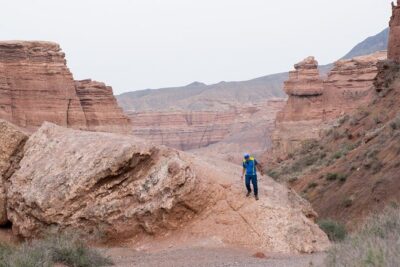
Charyn Canyon, Kolsay, and Kaindy Lakes Day Trip
Read our review →
Kolsai Kaindy Lakes & Charyn Canyons 2-Day Tour
Read our review →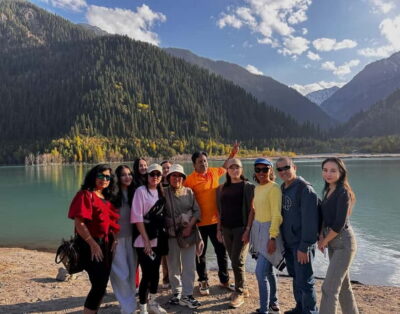

Treasures of Almaty lakes Kaindy and Kolsai,Charyn Canyon VIP car
Read our review →
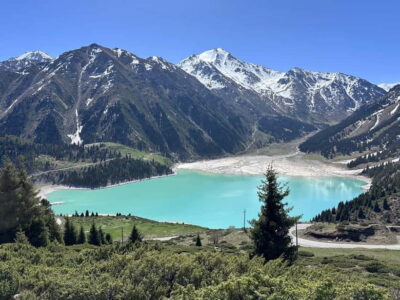
Almaty City: Big Almaty Lake Roundtrip Transfer and Tour
Read our review →
Singing dunes, Aktau Mountains & Altyn Emel Day Trip
Read our review →Browse the lists this tour appears in