
Reviewed · ASTANA TOURS
Half-Day Private Tour to Alzhir Camp from Nur-Sultan
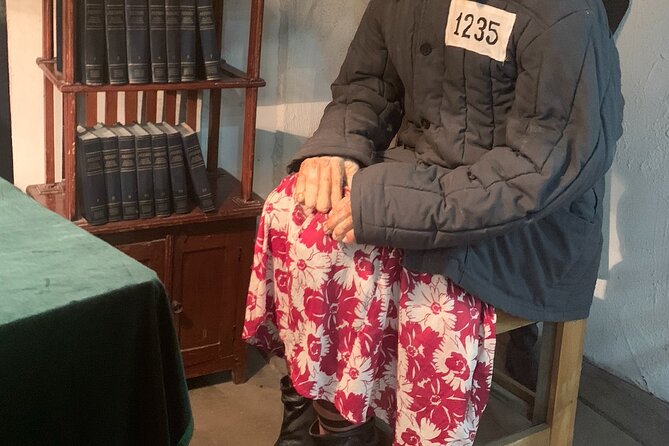
Alzhir is not a light sightseeing stop. It is a quiet memorial to more than 18,000 people sent to a Soviet camp because of their family ties, not because of proven crimes. The Wall of Memory, with more than 7,000 women’s names, gives this half-day outing a human scale that statistics alone cannot provide.
I like the private vehicle and the chance to see the open Kazakh steppe on the drive from Astana. I also like the included museum admission and the English-speaking guidance, with guides such as Kamilla and Timon bringing useful context to a difficult subject. The main drawback is the long round-trip drive for about two hours at the site, and the memorial can feel emotionally heavy.
Key points
- Alzhir lies about 40 kilometers west of Astana, making it a practical half-day escape from the city.
- The former camp held more than 18,000 prisoners, most sent there as family members of people labeled enemies of the Soviet state.
- A private, air-conditioned vehicle gives you hotel pickup, bottled water, onboard WiFi, and a quiet ride across the steppe.
- The museum complex includes a period prison train carriage, barracks, courtyard displays, and a Wall of Memory listing more than 7,000 women.
- English-speaking guides including Kamilla and Timon explain both the camp and the wider history of Kazakhstan.
- The $140 per-person price makes the most sense for a small group that values private transport and personal guiding.
Why Alzhir belongs on an Astana history day
Astana is known for modern architecture, grand government buildings, and broad new avenues. Alzhir offers a very different view of Kazakhstan. The memorial sits outside the capital, beyond the city’s polished center, where the road opens into the seemingly endless Kazakh steppe.
The camp operated from 1938 to 1953 and was one of the largest women’s camps in the Soviet Union. Its name is an abbreviation of the Russian phrase for Akmola camp for wives of traitors to the Motherland. That title tells you much about Stalin-era repression: a woman could lose her freedom because of what the state accused her husband or other family members of doing.
The site is now a museum and memorial complex. You are not simply looking at old buildings. You are being asked to consider how a government turned family relationships into grounds for imprisonment. That makes Alzhir a valuable stop for anyone interested in Soviet history, Kazakhstan, human rights, or the stories behind the country’s twentieth century.
The visit is also carefully contained in time. The full experience takes about four hours, with roughly one hour each way for the drive and about two hours at Alzhir. One account put the drive at about 40 minutes, so the exact timing may vary with the route and road conditions.
A few more Astana days to weigh up
- Private Half-Day City Tour of Astana in Comfort
★ 5.0 · 46 reviews - Half-Day Tour ( 4 hours)
★ 5.0 · 25 reviews - Big Almaty Lake – azure eye of Alatau (+ Ayu gorge) half-day tour
★ 5.0 · 39 reviews
The drive from Astana across the Kazakh steppe
Pickup is offered in Nur-Sultan, now commonly called Astana, and the tour uses a private air-conditioned vehicle. That matters here. Alzhir is outside the city, and public transport would make the outing less simple and less flexible.
The drive gives you a useful change of scene. Astana’s modern skyline gives way to open country and the wide, spare views of northern Kazakhstan. You have the chance to see the setting that shaped so much of life here: enormous distances, small settlements, and a horizon that seems to keep moving away.
Bottled water, WiFi, and private transportation are included. These are modest comforts, but they help on an excursion where the road time can take up half the morning or afternoon. You can sit back, ask questions, and keep the day focused on one important place instead of worrying about directions.
The route passes through the village of Malinovka. Stops there can be arranged by request, according to the tour details. Do not assume a long village visit is built into the four-hour schedule, though. Ask about it before departure if Malinovka interests you, since an extra stop could affect your time at the memorial or your return to the hotel.
Entering the Alzhir memorial complex
The first impression is likely to be solemn rather than dramatic. Alzhir is a place for careful attention, not quick entertainment. The museum and outdoor displays work together to show how prisoners arrived, where they lived, and how the camp functioned.
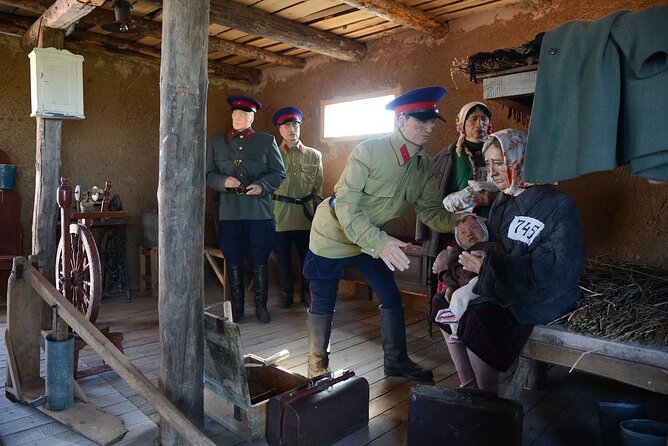
The former camp received its first prisoners at the beginning of 1938. Most were women connected to people classified as traitors to the Soviet state. More than 18,000 prisoners passed through Alzhir according to incomplete figures, and some died there.
Your guide helps place the displays in context. English-language guiding is especially useful because the story involves Soviet political terms, state repression, deportation, and family punishment. Kamilla has been praised for explaining both the camp and the wider history of Kazakhstan, while Timon has been noted for clear explanations during the visit.
That human context is the difference between looking at objects and understanding them. Without a guide, a train carriage or barracks might seem like a bare historical exhibit. With the background, each object becomes part of a system that controlled where women went, how they arrived, and how they lived.
The Stalin-era train carriage
One of the complex’s most striking objects is a train carriage from Stalin’s period, used to transport prisoners. It gives you a physical sense of the journey into captivity.
A wall panel can tell you that people were transported by rail. A carriage lets you think about the cramped conditions, the uncertainty of the trip, and the fact that the women inside had been removed from normal life without a fair legal process. The carriage is also a useful opening point for the visit because it connects the camp to the wider machinery of Soviet repression.
The tour information does not give exact details about how long you spend inside or beside the carriage. Your guide will likely shape the explanation around the group’s pace and questions. Plan to give this display more than a quick photograph. Its value is in pausing long enough to imagine the journey it represents.
Same base, a completely different day out:
- Astana City Tour: Private Full Day with Lunch and Comfort Pickup
★ 5.0 · 98 reviews - Astana: Burabay Oasis Private Tour+ Lunch+ Pickup+ Bonus Activity
★ 5.0 · 75 reviews - Full Day (6 hours) City Tour in Astana
★ 3.5 · 22 reviews - Astana: KarLag and Karaganda – Private USSR history tour
★ 5.0 · 21 reviews
The museum and its film
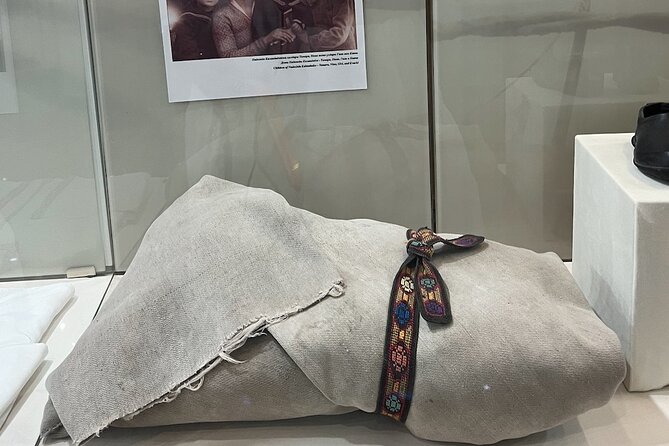
The main museum building provides the historical framework for the site. This is where the broad story of Alzhir comes together: the camp’s opening in 1938, its operation until 1953, the scale of imprisonment, and the treatment of women whose supposed offense was their relationship to someone condemned by the state.
A film is shown at Alzhir, and it has been singled out as a helpful part of the visit. Film can make the chronology easier to follow before you walk through the outdoor displays. If you find Soviet history confusing, pay close attention here. The film can give you the basic structure, while the guide adds the local detail.
The museum is not presented as a cheerful attraction, and that is appropriate. You should expect a sober visit. The subject matter includes imprisonment, forced separation, and death, so this is not the best choice if you want a relaxed break from Astana’s city sights.
Still, the museum offers something the city center cannot: a direct encounter with a painful part of Kazakhstan’s past. I find that the serious tone makes the visit more meaningful, not less. The site asks for attention, but it rewards it with a clearer understanding of how political repression affected ordinary families.
The Wall of Memory and the women behind the numbers
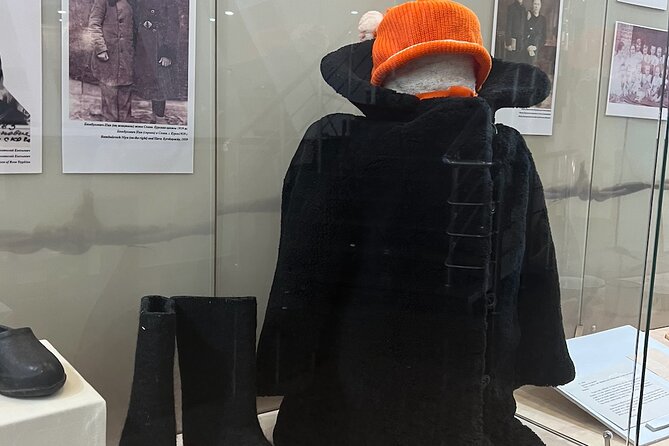
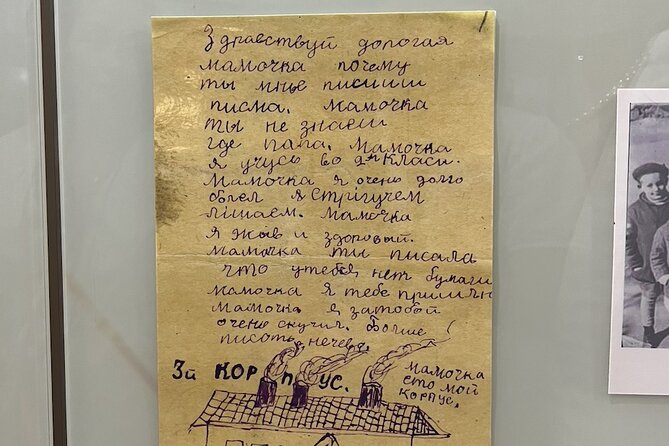
The Wall of Memory carries the names of more than 7,000 women who served time at Alzhir. This is likely to be the most personal point of the visit.
The total number of prisoners is difficult to picture. Eighteen thousand is a large figure, and it can remain abstract. A long list of names changes that. You see that the camp was made up of individual women, each with a family, a life, and a story that was interrupted by state power.
Do not rush past the wall. You may not be able to absorb every name, but the act of standing there changes the scale of the story. The camp was not just an institution. It was a collection of people who had been judged through their relatives.
This is also where a guide can help without overwhelming you. A good explanation should connect the names to the wider pattern of Stalinist repression while leaving room for silence. Kamilla and Timon have both been identified as English-speaking guides for this experience, so you can ask questions as the memorial unfolds.
The barracks and courtyard displays
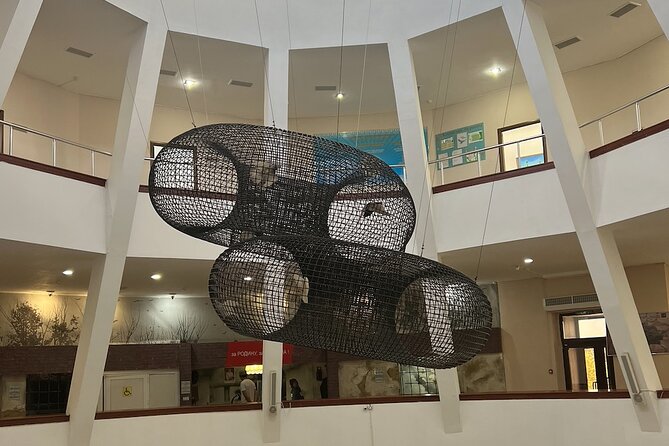
The barracks show where the women prisoners lived. Their importance is simple: they take the history from the level of government orders to the level of daily existence.
You can also see other courtyard exhibits around the complex. The supplied details do not specify every object, so it is best to think of this area as a group of outdoor displays rather than expect a fixed list of artifacts. Your guide can explain what each item represents and how it fits into the camp’s operation.
The barracks may be less visually imposing than the train carriage or memory wall, but they help complete the picture. The carriage shows arrival. The museum explains the system. The barracks show confinement. The wall remembers the people.
About two hours is a sensible amount of time for the complex. It gives you room to visit the museum, watch the film, walk among the outdoor exhibits, and listen to the guide without turning the visit into a race. If you are especially interested in Soviet history, you may wish you had longer, but the half-day format keeps the outing manageable.
What the $140 price really covers
The listed cost is $140 per person. That is not a bargain-priced local museum visit, but the price needs to be judged against what is included and the private format.
You receive private transportation, an air-conditioned vehicle, hotel pickup, bottled water, WiFi onboard, museum admission, and all fees and taxes. Lunch is not included. The private setup also means only your group participates, rather than joining a bus full of strangers.
For one person or two people, $140 per person is a substantial expense for a four-hour outing. The value improves for a small group, particularly if a group discount applies. You are paying not only to enter Alzhir but also for the return transport from Astana and the convenience of having a guide focused on your questions.
The English-speaking guide is a key part of the value. Alzhir’s subject is too important to reduce to labels and photographs, and language support can make the difference between a visit that feels remote and one that makes sense. The strongest feedback about the experience focuses on the explanations from Kamilla and Timon, along with the informative film.
I would compare the price with the cost and effort of arranging a private car and guide separately. If you are already hiring a vehicle for other sightseeing, the tour may look less attractive. If you want a straightforward, private trip to a site outside Astana, the package is easier to justify.
Who will get the most from this half-day tour
I would recommend Alzhir to you if you care about:
- Soviet political history and Stalin-era repression
- Memorials and museums connected to human rights
- Kazakhstan beyond Astana’s modern city center
- Private touring with an English-speaking guide
- Seeing the steppe while visiting a significant historical site
The outing suits independent-minded people who prefer a focused visit rather than a broad city tour. It also works well if you have only one free morning or afternoon in Astana and want to use it for a place with real historical weight.
I would think twice if you are seeking light entertainment, shopping, food, or spectacular architecture. The site is emotionally difficult, and much of its power comes from quiet reflection. The open steppe is interesting, but the ride is still a transfer of up to about an hour each way.
Most people can participate, and service animals are allowed. Weather matters because the experience requires good conditions. If poor weather forces cancellation, you are offered another date or a full refund.
Booking and timing advice
This tour is commonly reserved well in advance, with an average booking time of 32 days. That does not guarantee you must book a month ahead, but it is a useful warning if your Astana dates are fixed.
Confirmation is normally issued at booking. If you reserve within seven days of the tour, confirmation can take up to 48 hours and remains subject to availability. Keep an eye on the timing if your schedule is tight.
Free cancellation is available up to 24 hours before the start time for a full refund. Changes or cancellations made less than 24 hours before departure are not accepted for a refund. The cut-off follows local time, so check the clock carefully if you are booking from another country.
No lunch is included. For a four-hour outing, that may not matter, but you should plan around your departure time. Bottled water is included, which is useful during the drive and outdoor portion of the visit.
Should you book the Alzhir Camp tour?
Book this tour if you want a serious, well-focused half-day outside Astana and prefer to have transport and historical explanation handled for you. The private vehicle, included admission, English-speaking guiding, and the chance to see the steppe make the outing practical as well as meaningful.
I would especially choose it for a small group that can benefit from the private format and any available group discount. Kamilla and Timon have both been associated with clear English explanations, and the film, train carriage, barracks, and Wall of Memory give the visit a strong sequence.
Skip it if you have little interest in twentieth-century history or if a solemn memorial would weigh on your trip. Alzhir is not a casual stop, but if you are willing to give it four focused hours, it offers one of the clearest ways to understand the human cost of Soviet repression in Kazakhstan.
FAQ
Where is Alzhir Camp located?
Alzhir is about 40 kilometers west of Nur-Sultan, now commonly called Astana, in Kazakhstan.
How long does the tour take?
The experience lasts approximately four hours, including about one hour of travel each way and roughly two hours at the Alzhir memorial complex.
Is hotel pickup offered?
Yes. Pickup is offered, followed by a transfer back to your hotel after the visit.
Is this a private tour?
Yes. Only your group participates in the private activity.
Is museum admission included?
Yes. Admission to the Alzhir memorial museum complex is included in the tour price.
What can you see at Alzhir?
The complex includes a Stalin-era prison train carriage, the museum building, the Wall of Memory with more than 7,000 names, a barracks building, and other courtyard exhibits.
Is an English-speaking guide available?
The experience includes English-speaking guiding. Guides associated with the tour include Kamilla and Timon.
Is lunch included?
No. Lunch is not included in the price.
Can I cancel for a full refund?
Yes, if you cancel at least 24 hours before the experience start time. Cancellations made less than 24 hours before the start time are not refunded.
Just added around Astana
- The Old City Tour★ 5.0 · 3 reviews
- Astana Private Custom Walking Tour with A Local Guide★ 4.0 · 3 reviews
- Half Day Private Astana City Tour in Comfort★ 5.0 · 5 reviews
- Private Transfer from Nursultan Nazarbayev (NQZ) Airport to Astana★ 5.0 · 6 reviews
- Half Day (3 hours) City Tour★ 5.0 · 6 reviews
- Tour to Burabay National Park★ 4.5 · 6 reviews
- Guided Night Time Tour of Astana in a Private Car★ 5.0 · 8 reviews
- Private Comfort Burabay Nature Tour: All included★ 5.0 · 8 reviews
Astana Tours, compared.
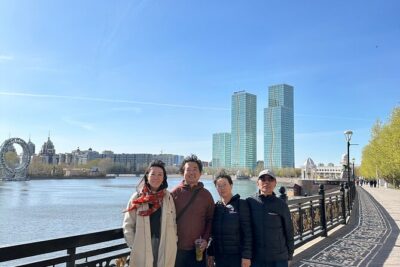
Astana City Tour: Private Full Day with Lunch and Comfort Pickup
Read our review →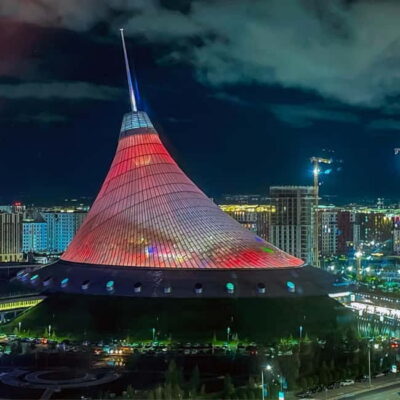
Astana City Tour: Explore Night City with a Certified Guide
Read our review →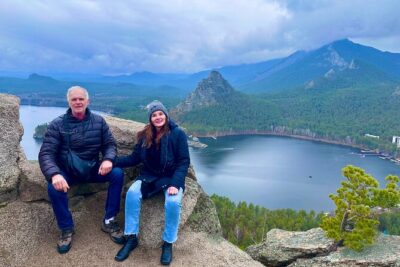
Burabay Oasis Private Tour+ Lunch+ Pickup+ Bonus Activity
Read our review →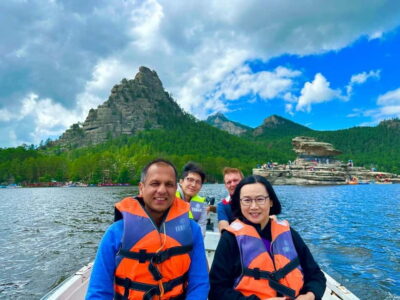
Burabay National Park Tour with Lunch and Pickup
Read our review →
Astana City Tour: Certified Private Guide+Lunch+Wine Tasting
Read our review →Astana: Back to USSR – Gulag Museum with Certified Guide
Read our review →
Browse the lists this tour appears in